How Do New AI Tools Differ from ChatGPT?
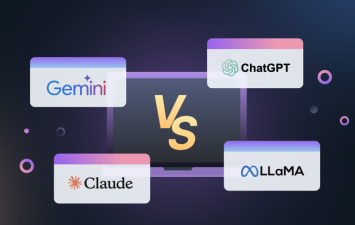
With the continuous breakthroughs in artificial intelligence (AI) technology, chatbots have become an important tool for people to obtain information and solve problems. Among numerous chatbot products, ChatGPT has attracted widespread attention due to its powerful language generation and contextual understanding capabilities. How does it differ from other AI systems, and why is it so popular?
What is ChatGPT?
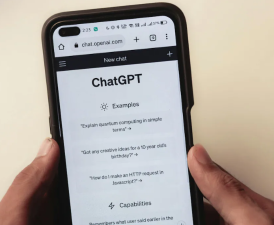
ChatGPT is an AI chatbot model developed by OpenAI. The "GPT" in its name stands for "Generative Pretrained Transformer." In short, ChatGPT can understand and generate natural language and engage in very fluent conversations.
Through training with a large amount of text data, ChatGPT can converse with humans in almost any domain. It can not only answer questions but also write stories, create jokes, and even simulate complex dialogue scenarios. Users only need to input text, and ChatGPT will generate appropriate responses based on the context.
What was AI like before ChatGPT?
Before ChatGPT, AI technology had already been applied in many fields, but its capabilities and scope were generally limited. For example:
Rule-based AI:
These early AI systems relied on pre-set rules for reasoning and decision-making. They excel at specific tasks but perform poorly when faced with new or complex situations.
Machine Learning (ML) and Deep Learning (DL):
The emergence of these technologies allows AI to learn from massive amounts of data, no longer relying on fixed rules. Deep learning models, especially Convolutional Neural Networks (CNNs) and Recurrent Neural Networks (RNNs), excel in fields such as image recognition and speech recognition.
What Distinguishes ChatGPT from Other AI
ChatGPT's language prediction model is key to its differentiation from other AI. Trained on a large-scale dataset, its ability to understand and use language far surpasses simple keyword matching or pattern recognition techniques. This advanced model enables ChatGPT to provide highly relevant and context-aware answers, even simulating multi-turn dialogues, recognizing user intent, and providing appropriate feedback accordingly. This capability is not merely achieved through simple information retrieval, but through understanding the deep meaning of language and the specific needs of users—something traditional AI tools struggle to match.
Powerful Language Prediction Model
One of ChatGPT's core strengths is its language prediction model, which allows it to understand and even predict the questions or statements users might ask. By learning from massive amounts of text data, ChatGPT can understand complex sentence structures, slang, and even obscure language, not to mention regular conversational content. This understanding allows ChatGPT to provide highly human-like and accurate answers when processing user queries.
Furthermore, a key application of this predictive model is in conversation management. ChatGPT can predict the possible direction of a conversation, helping it build a more natural and fluid dialogue experience. It not only answers questions but also asks questions or makes suggestions within the conversation, making communication more dynamic and engaging.
Interactive Dialogue Capabilities
Unlike many traditional AI tools, ChatGPT was designed to provide an interactive dialogue experience. It maintains a continuous conversational context, remembering the history of the conversation to generate more relevant and coherent responses. This capability is particularly important when handling complex conversations or requiring users to perform multiple steps.
For example, in scenarios involving travel planning or shopping advice, users' questions and needs are often not fully expressed at once. ChatGPT can gradually clarify user needs within such conversations, providing more targeted and personalized suggestions.
Adaptive Learning Mechanism
Another significant feature of ChatGPT is its adaptive learning capability. Through interaction with users, it continuously learns and adapts to improve its accuracy and effectiveness. This learning goes beyond simply accumulating more data; more importantly, it involves advancements in understanding user intent and preferences.
This mechanism allows ChatGPT to be seamlessly integrated into different business scenarios, optimizing based on the characteristics of specific domains and user feedback. Whether in customer service, content generation, or online education, ChatGPT can provide customized services.
Customizability
Finally, customizability is another key aspect that distinguishes ChatGPT from ordinary AI tools. It offers rich API interfaces and development toolkits, allowing developers to customize ChatGPT's behavior and response patterns to their specific needs. From adjusting the style and complexity of responses to customizing knowledge bases for specific industries or applications, ChatGPT offers exceptional flexibility and scalability.
This capability ensures that ChatGPT can be widely applied across various scenarios and industries, meeting the specific needs of different users. Whether in fields demanding highly personalized services or applications requiring rapid response and high accuracy, ChatGPT provides efficient and effective solutions.
Conclusion
As a disruptive artificial intelligence technology, ChatGPT demonstrates significant advantages in learning ability, contextual understanding, generative responses, and conversational fluency. However, in practical applications, we also need to be aware of its potential limitations and use it appropriately in specific scenarios. With the continuous development of artificial intelligence technology, we have reason to believe that chatbots will play an even more important role in the future, bringing more convenience and enjoyment to people's lives.